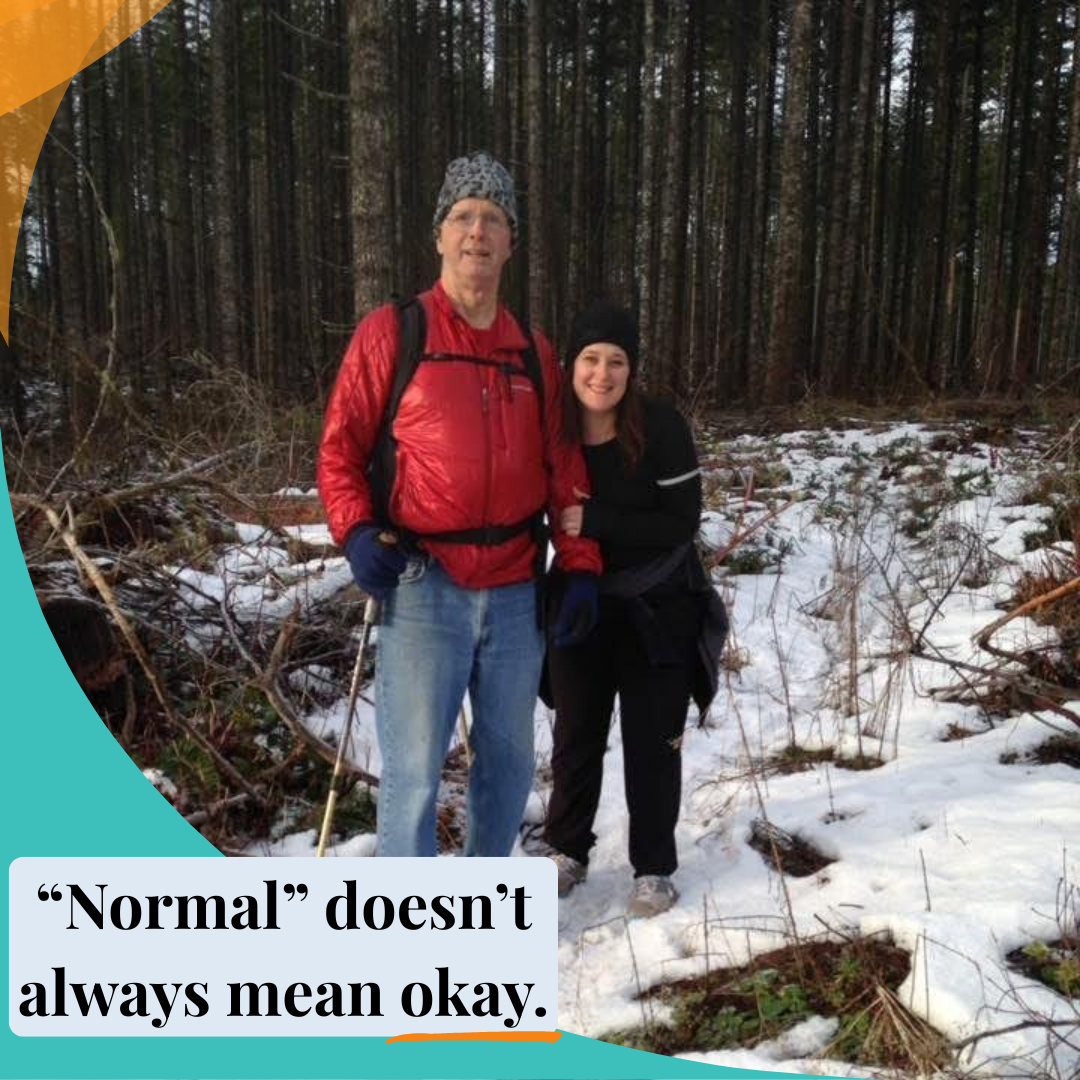
A nurse and daughter shares what her father’s medical journey taught her about persistence, advocacy, and choosing the right diagnostic test.
Guest article by Shasta Hill, BSN, RN
“Everything looks normal.”
Those are words every family hopes to hear. But what happens when they do not match what you are seeing every day? What happens when the person you love continues getting worse while every test seems to say nothing is wrong?
This is the story of my dad, Tom, shared with his permission before he passed away. It is not simply a story about a rare cancer. It is a story about persistence, advocacy, and the importance of choosing the right diagnostic test.
As a nurse and one of Dad’s caregivers, I learned that “normal” does not always mean everything is okay. Sometimes it means the test could not answer the question that needed to be asked.
When the Results Did Not Fit the Symptoms
Tom’s symptoms began with increasing difficulty urinating because of an enlarged prostate. Medication had controlled the problem for years, but his symptoms slowly worsened. A CT scan showed no concerning changes. His PSA remained normal. A cystoscopy was unchanged.
There was one important limitation: Tom had undergone bilateral hip replacements, and the metal created artifact on the CT scan. The very area doctors needed to evaluate could not be seen clearly, yet the overall result was still considered reassuring.
Over the following months, his symptoms accelerated. He was using the bathroom every 20 to 40 minutes, waking repeatedly at night, and struggling with the daily walks that had always been part of his life. Then he developed severe groin pain. An ultrasound found nothing concerning, and treatment for prostatitis did not help.
Soon afterward, he became suddenly short of breath. At the emergency department, doctors discovered extensive blood clots in both lungs. Multiple tests searched for the source. None found one.
The Man We Knew
At 83, Tom did not fit the picture of someone whose clots were easily explained by inactivity. He had run marathons for decades, hiked the entire Pacific Crest Trail in his sixties, and continued walking six or seven miles every day despite Parkinson’s disease and multiple joint replacements.
When his pulmonary emboli were attributed to an eight-hour car ride, our family struggled to reconcile that explanation with the man we knew. His body was telling us something else.
Looking Beyond the Same Tests
Tom was hospitalized repeatedly. His blood clots worsened, his breathing declined, and his ability to walk disappeared. CT scans and ultrasounds were repeated, but the answers did not come.
Eventually, we sought care at a larger medical center. An experienced interventional radiologist ordered a CT venogram rather than relying only on arterial imaging. It revealed a severe blockage in his common iliac vein that earlier imaging had missed.
We finally knew where the clots were forming, but not why.
The Test That Found the Answer
Throughout the hospitalizations, I kept asking the same question:
“If the CT cannot adequately see the area because of his hip replacements, why are we not doing an MRI?”
The answer was often that an MRI probably would not show anything different.
After five emergency room visits, four hospital admissions, numerous CT scans, and repeated ultrasounds, one physician finally ordered the MRI.
Within hours, a mass was discovered between Tom’s prostate and rectum. The tumor was hidden in the exact area the CT scans could not clearly evaluate because of the metal artifact.
It was not that testing had not been done. It was that the same test had been repeated despite its known limitation.
Racing Against Time
The tumor’s location and Tom’s extensive clotting made obtaining a biopsy difficult. He underwent repeated procedures to preserve blood flow while pathology worked to identify an exceptionally rare cancer.
By the time the diagnosis was confirmed, surgery—the only definitive treatment—was no longer possible. Radiation could only slow the disease and relieve symptoms.
“Why can’t I start treatment while I’m still strong?”
By the time radiation began, he no longer had the strength to complete it. He chose hospice and spent his remaining time surrounded by family. He died a little over a month later.
What Caregivers Should Ask
No one can say with certainty that earlier imaging would have changed Tom’s outcome. But it is fair to ask whether a different test should have been considered sooner when his symptoms continued to worsen and the limitations of the CT scan were already known.
Being an advocate does not mean demanding every possible test. It means asking thoughtful questions:
- What are the limitations of this test?
- Is there another test that may show the area more clearly?
- What else could explain these symptoms?
- If this were your family member, what would you do next?
Caregivers often see subtle changes that a single appointment or scan cannot capture. You know when the person you love is not themselves. That perspective matters.
Keep a record of symptoms. Bring another person to appointments. Seek a second opinion when the pieces do not fit together. Most physicians welcome thoughtful questions, and good medicine often comes from collaboration among clinicians, patients, and families.
Tom’s Lasting Lesson
Tom’s story is not about criticizing healthcare providers. Every clinician involved was trying to help with the information available at the time.
His story reminds us that medicine is as much about asking the right question as it is about finding the right answer.
Sometimes the next step is not repeating the same test. Sometimes it is choosing a different one.
As a nurse, it is my professional opinion that further testing was warranted in Dad’s case. Whether it would have changed the final outcome, no one can know. But I believe it may have given him a better chance.
If sharing Tom’s experience encourages one family to ask one more question, seek one more opinion, or helps one clinician consider a more appropriate test, then his story will continue making a difference.
| About the Author Shasta Hill, BSN, RN, is a registered nurse and family caregiver. She shares Tom’s story to encourage families to trust their observations, ask informed questions, and advocate for appropriate diagnostic care. |

Follow us on our social media channels for the latest updates, health tips, and much more: